Bristol Beacon
Opening night (case study)
Overview
Another favourite project of mine.
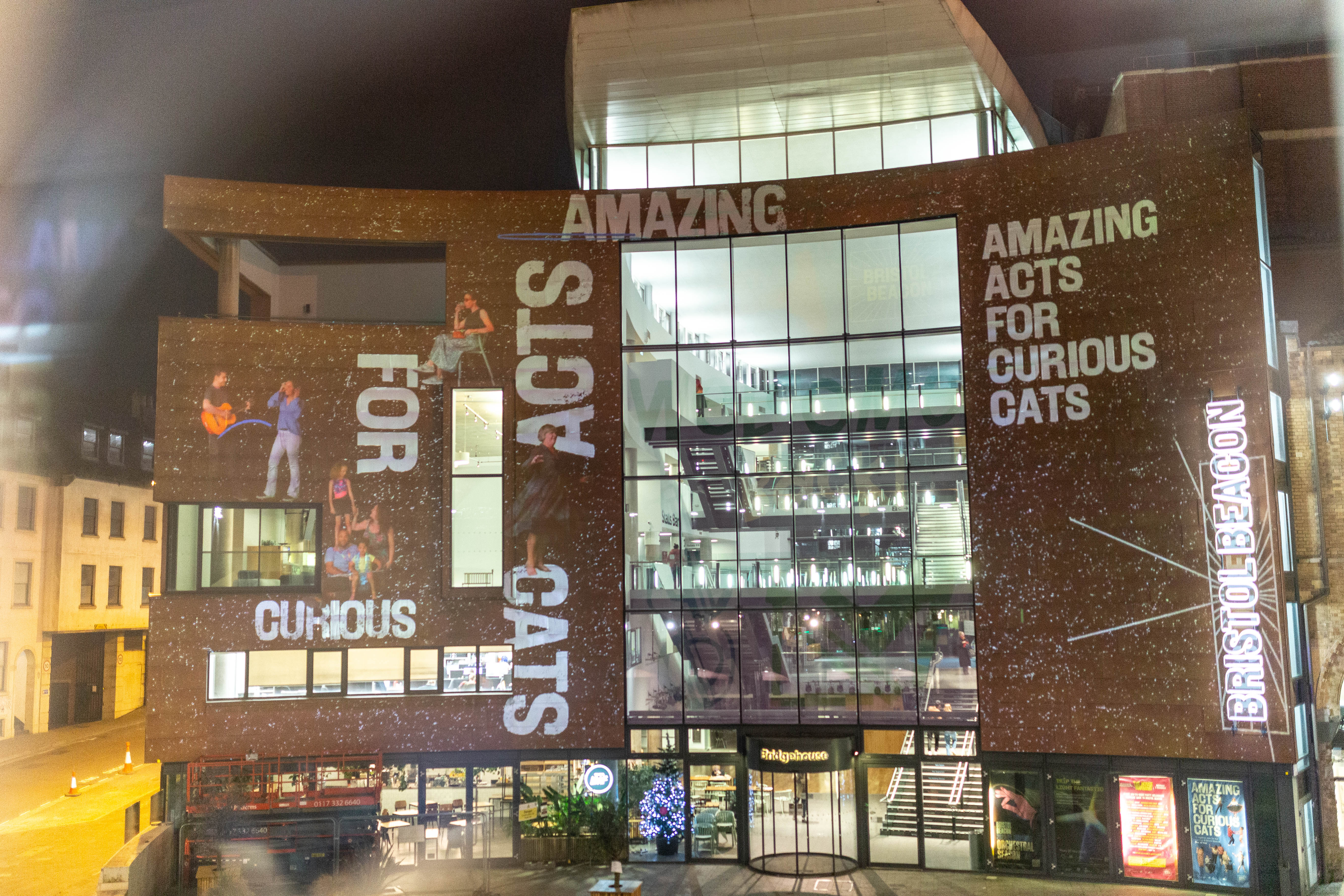
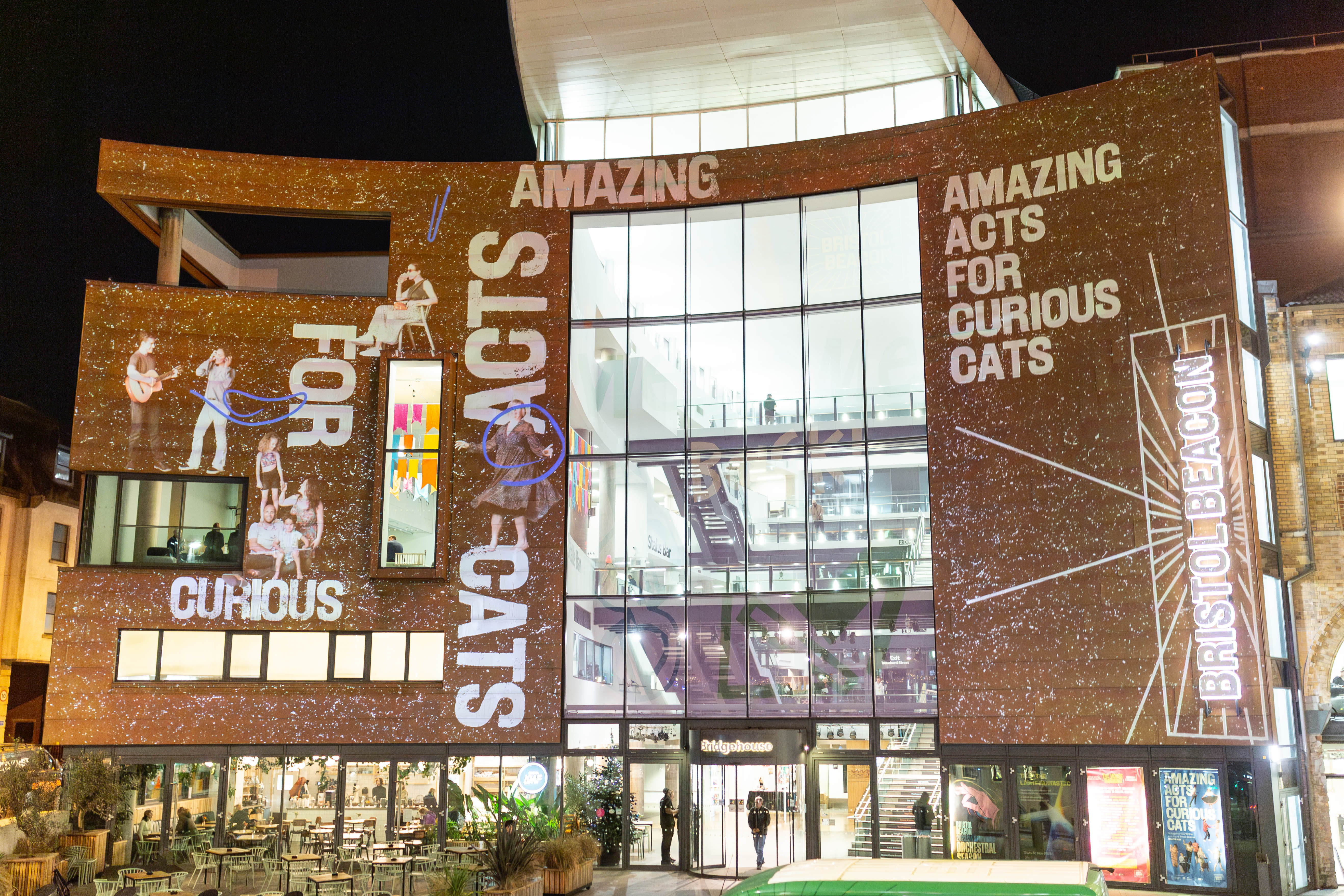
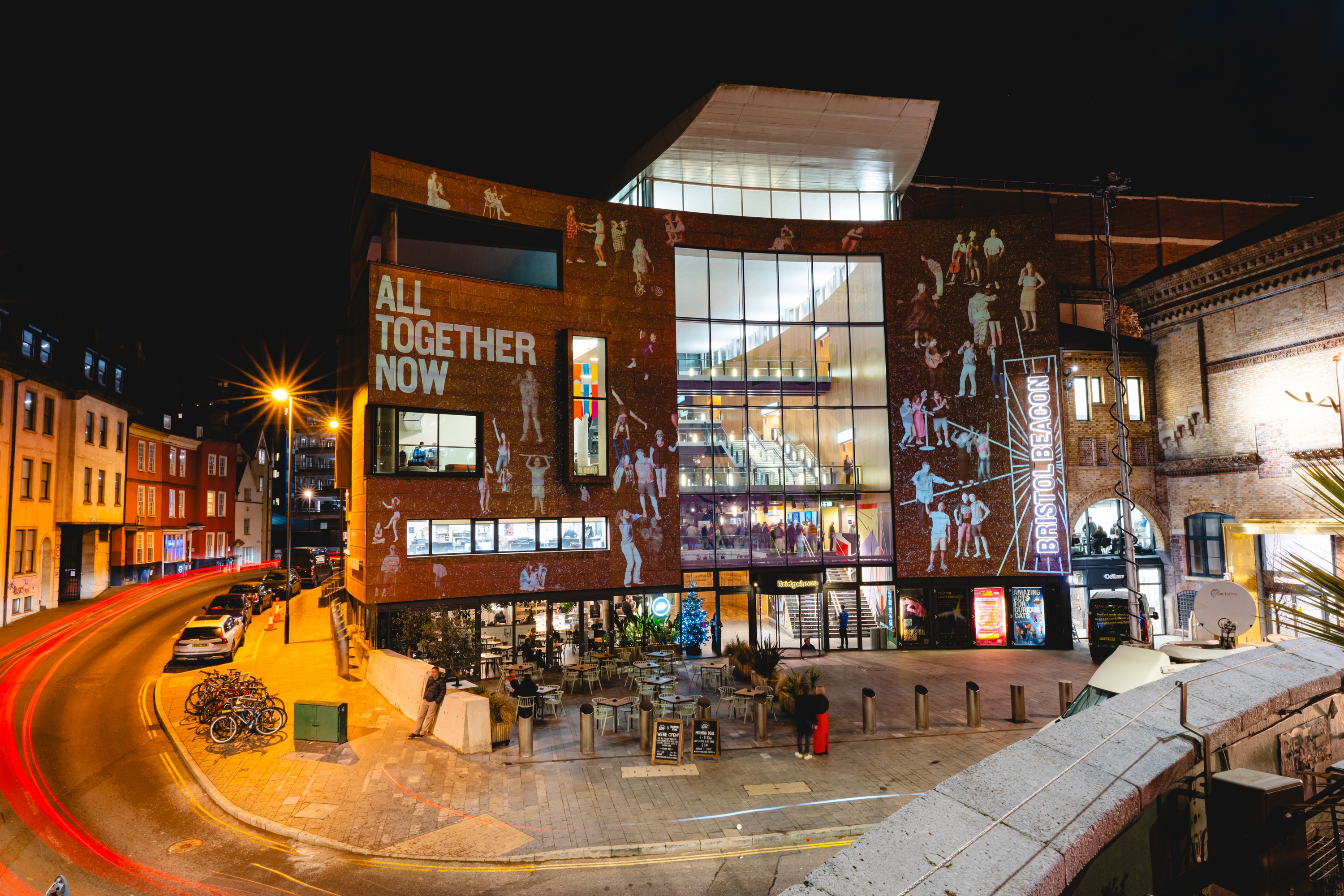
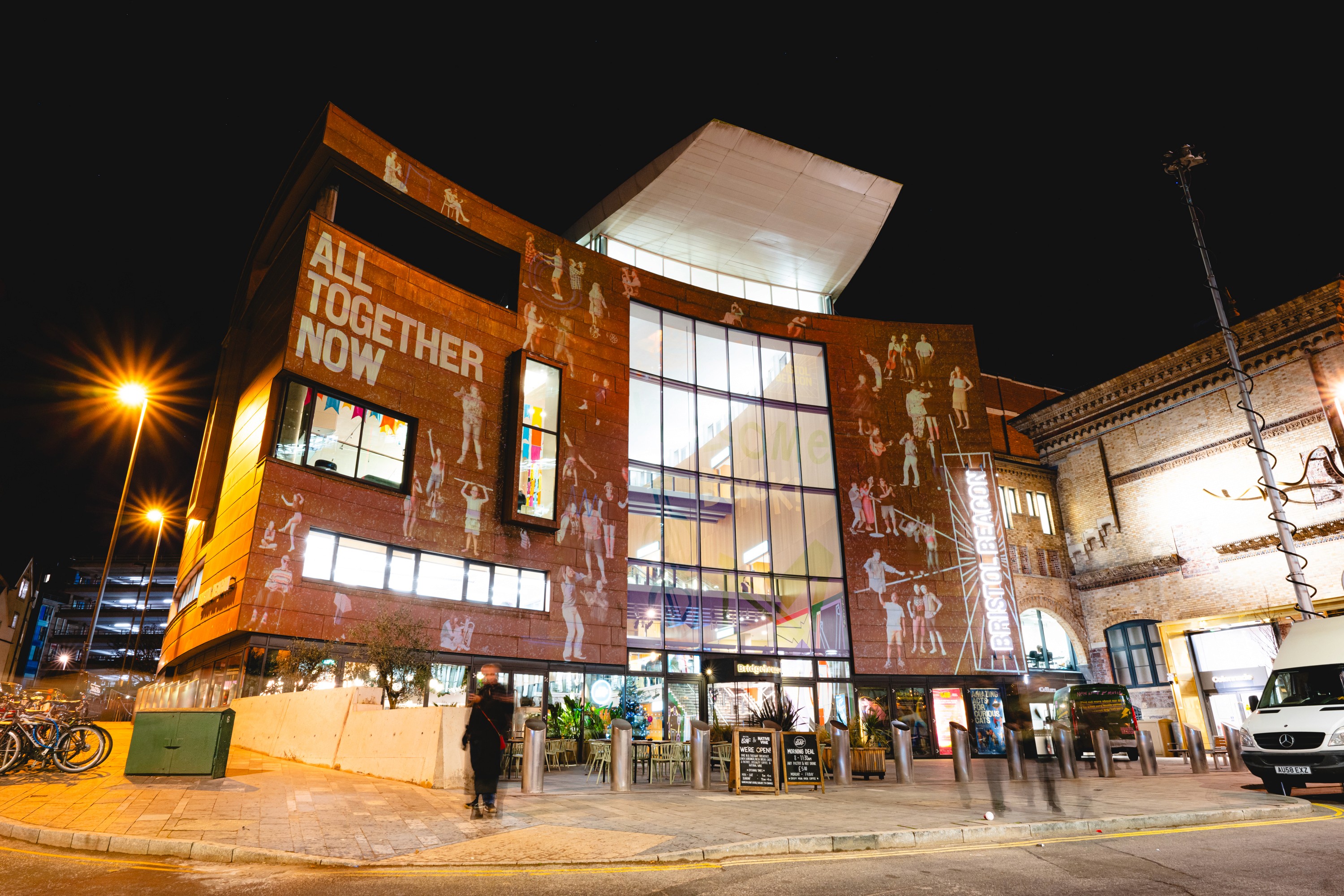
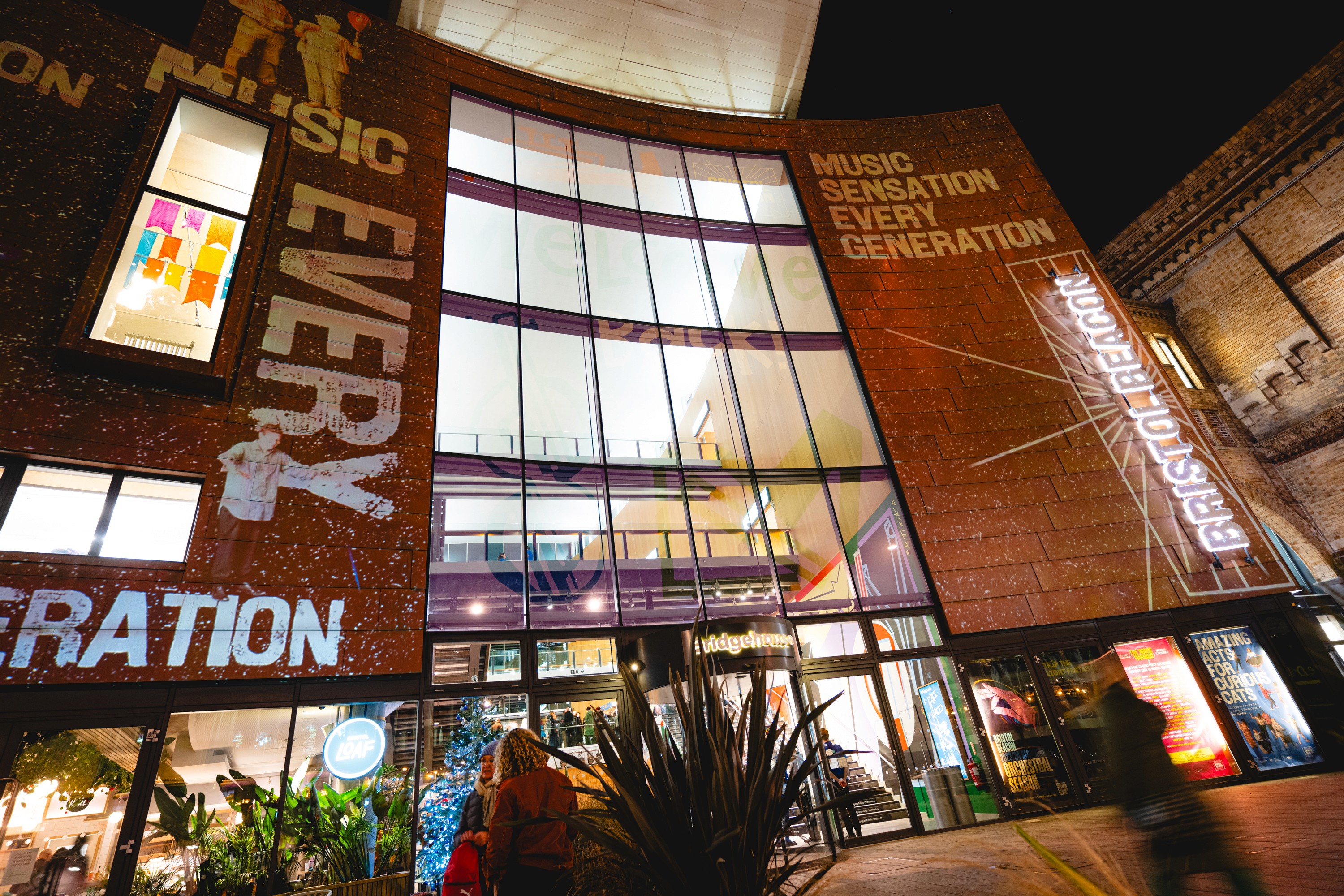
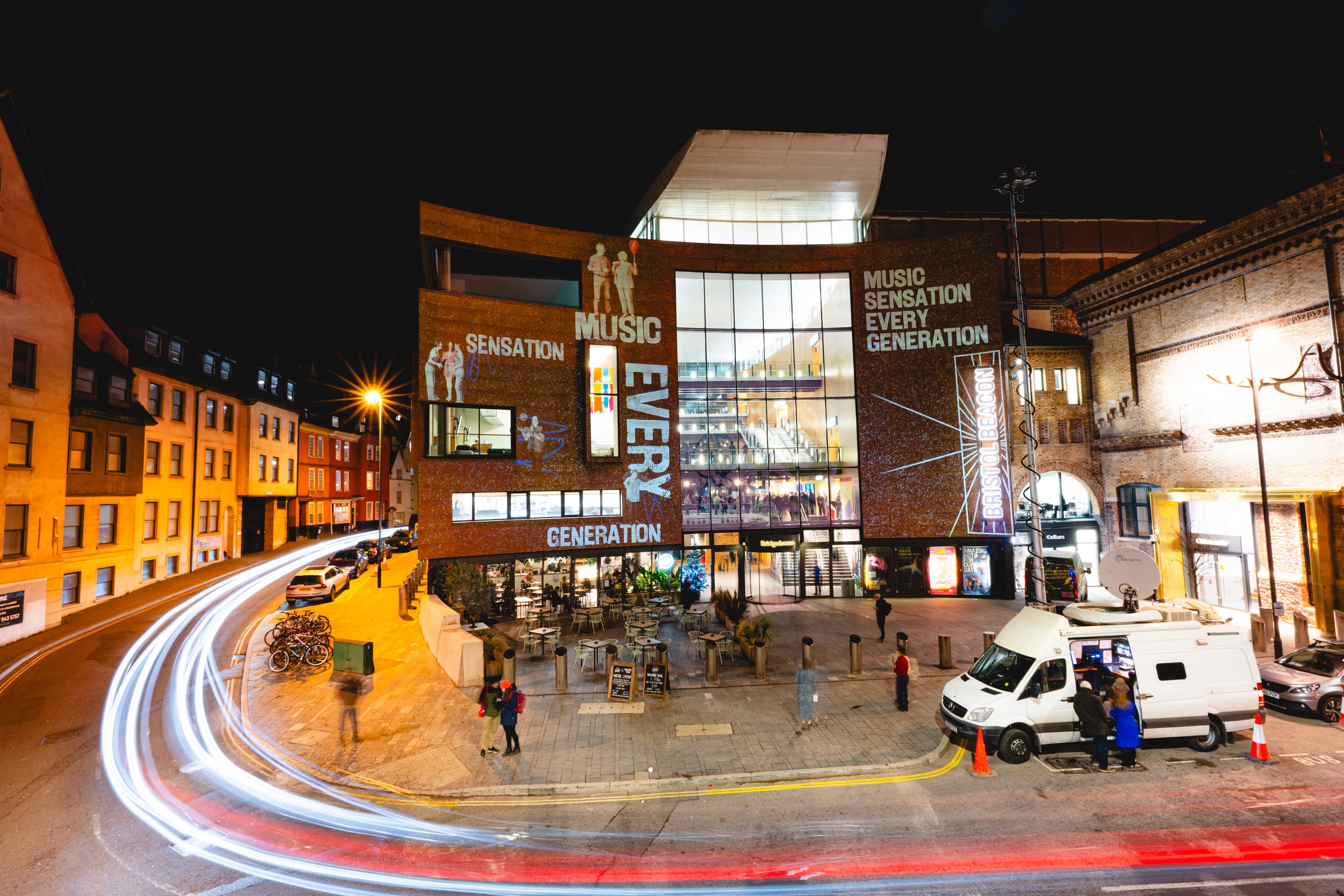
This was a fast turnaround job and one packed with challenges. The brief was to create something big for the opening night. The solution landed on projection mapping across the outside of the building, designed to pull people in from the street and give them a taste of the party before they even stepped inside.
It was certainly a big project, if you pardon the pun.
That said, it was not without its issues. There were some significant hurdles along the way, so stay tuned as I will be sharing the insights and lessons learned.
Image from the day
Scope
Motion Design
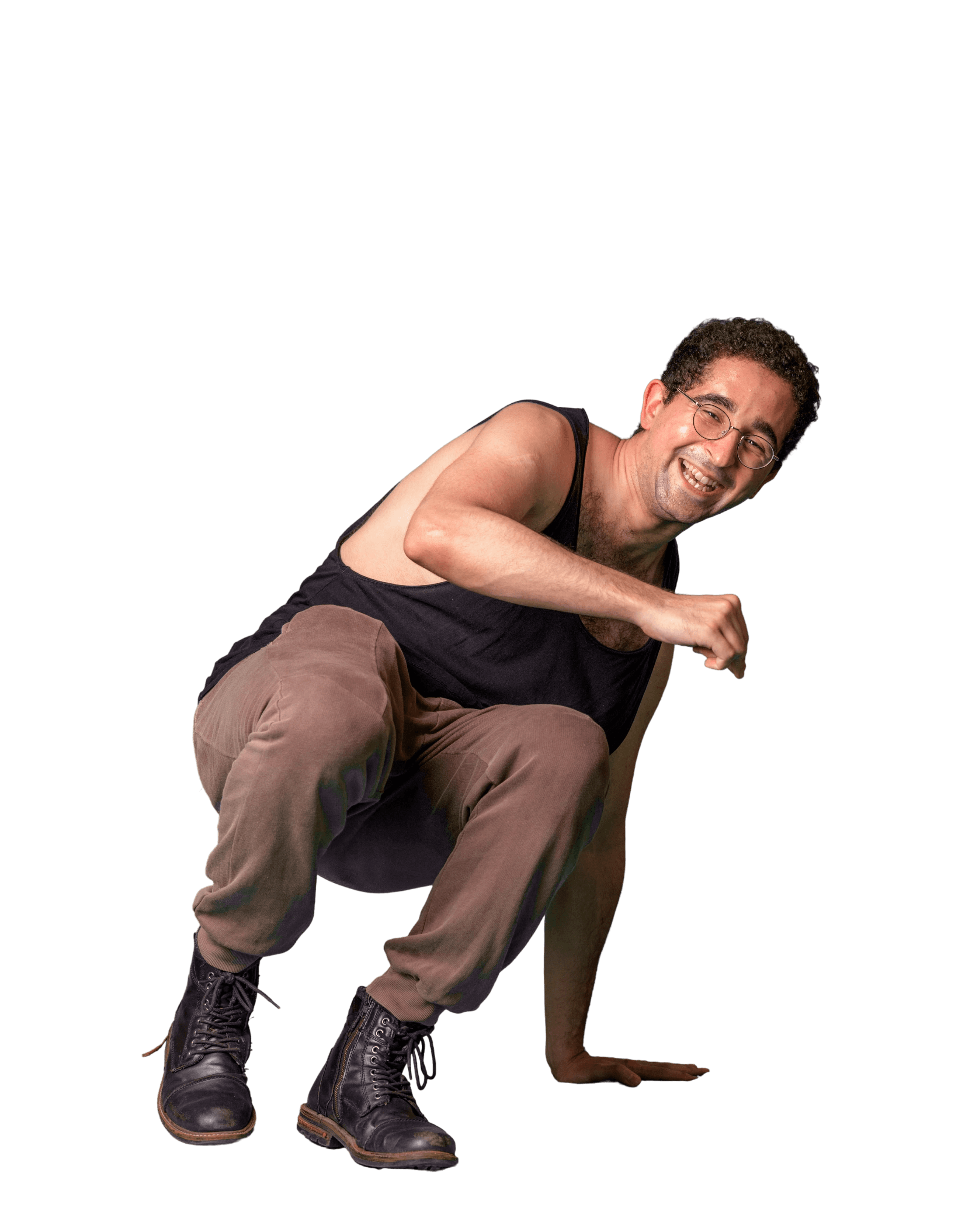
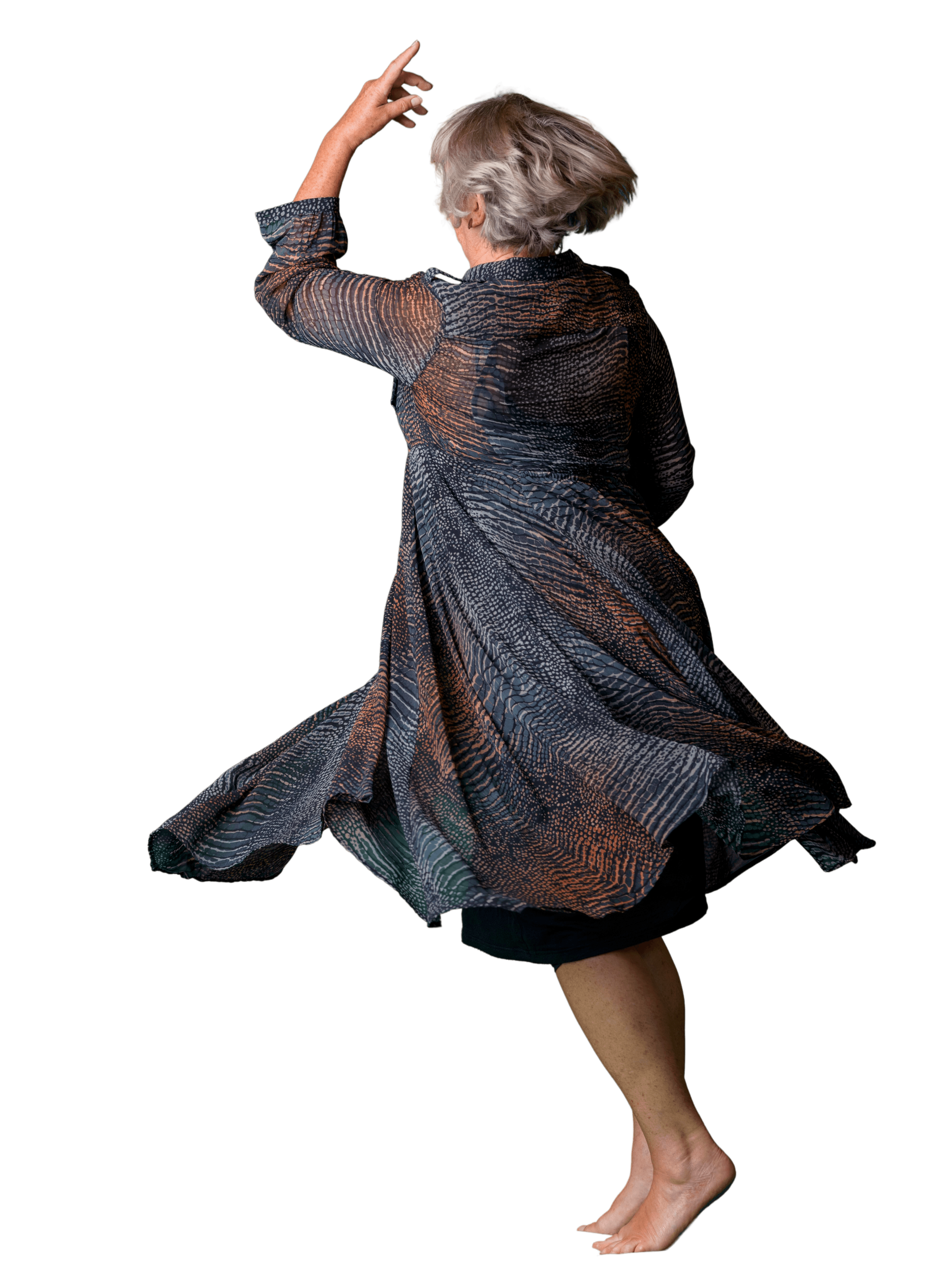
The client had a pack of photos from a photoshoot they held, it was of the people of bristol, the people that would be enjoying this venue, so the first step was to animate the photos, adding movment to them, I choose to do this in a frame by frame style as it would work best on the front of the building, no motion blur to make it look sharp and quirky.
Images from the photo shoot


he next step was integrating the client’s new branding into the typography and logo elements. As the logo wordmark was already physically present on the building, I designed the motion to originate directly from it. The new brand elements expanded outward from the logo, almost like a sunrise, before settling back into place with precise projection mapping alignment.
I worked closely with Holotronica on this project. They are specialists in large-scale projection mapping and installations, and are perhaps best known for the New Year’s hologauze visuals created for the BBC camera feed. Holotronica provided a flat projection map of the building, which I used as the foundation to build all motion accurately to scale.
This introduced the first major challenge. As with most large-scale projection projects, the sheer size of the composition pushed my hardware to its limits. Progress was slowed by lagging viewports and reduced playback, meaning accuracy had to be judged carefully without always seeing smooth motion in real time. The final animation could only truly be reviewed once rendered, which resulted in another long three-hour render for the final raster output.
If you want, the next paragraph could lean further into problem solving, technical decision making, or creative restraint under pressure, depending on how deep you want this case study to go.
Final render sequence
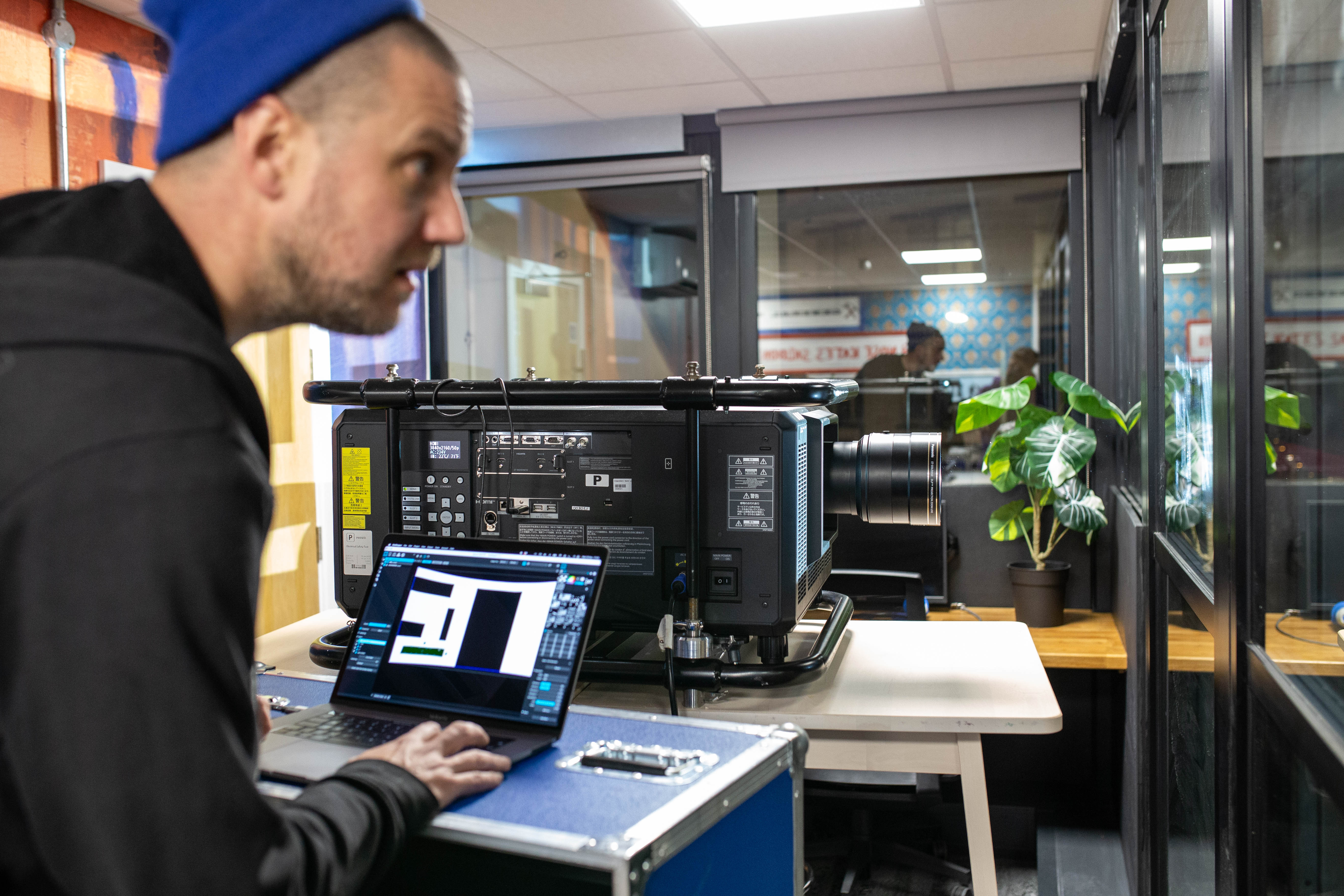
Once the files were close to being finalised, we headed on site the day before the event to begin setup. This is where a new set of challenges emerged. The projector was housed in a secondary building opposite the main venue, also owned by Bristol Beacon.
The first hurdle was simply getting the projector into position. The unit was extremely heavy and highly valuable, weighing in at over 300kg. The disabled lift at the entrance could not take the load, so the only option was manual handling. With six of us lifting, we carefully carried it up the first set of stairs before transferring it into a more substantial lift, followed by a final set of stairs to reach its intended position.
Once installed, another issue became apparent. During the planning stage, the building had been undergoing renovation and several windows were missing. By the time of setup, the windows had been reinstalled, which significantly reduced the brightness and lumen output reaching the facade.
The final challenge was the surface itself. The exterior of the Beacon is a reflective metal material, which is far from ideal for projection mapping. Visibility was limited until full darkness, but it became workable once night fell. To help counteract this, I adjusted the animation by introducing a subtle curve to the overall composition, giving the projection the best possible chance of reading clearly across the surface.
If you want, the next section could focus on opening night results, what you would do differently, or key takeaways for future large-scale projection work.
The setup